Rabu, 14 Maret 2012

Troubleshooting of Underwater Welding

Although there are several obstacles that make the industry are reluctant to use this welding technique, in fact there are some business improvements that have been made, both in technique and quality of welding electrodes, that is :

  1. Hydrogen cracking and HAZ hardness in the area can be minimized or avoided by the application of multiple temper bead (MTB). The concept of this technique is to control the ratio of heat (heat input) between the layers of the welding bead. Heat control, the size of the weld bead on the first layer should be adjusted so that the minimum penetration into the material could be obtained. Likewise for the second layer and so on. There are three parameters that affect the quality of welding in the application of this MTB, which is the distance between the bead tempering, welding time range, and heat input.
  2. Buttering technique can also be used primarily for materials with more than 0.4% CE. Electrodes used butter can have the oxidizing agent electrode or electrodes Thermit.
  3. Usage of the electrode with the oxidizing agent. This agent will absorb hydrogen or oxygen gas is absorbed in the HAZ.
  4. Use of Thermit electrodes can also be used. Electrodes of this type will produce a high heat and the provision of weld material (weld metal) are slightly thereby reducing the rate of cooling of the welding by the surrounding temperature, causing a kind of post weld heat treatment process.
  5. Nickel-based electrodes can not withstand the hydrogen to diffuse into HAZ area. Unfortunately the hardness in the HAZ area is still high and the welding quality is only good for up to 10 meters depth.

Selasa, 13 Maret 2012

Little About Welding Process


The development of metal technology provides ease of connection to humanity in the conduct of life. Today, the advancement of science in electronics through That studies look at the characteristics of atoms, have Contributed greatly to the discovery of new materials and also how do the connection. Manufacturing industry can not be separated from the metal connection. The connection is made of metal for Various purposes, Such as to create an item That is not possible with other techniques, facilitate the work, and can Reduced production costs. Switching process is Widely used metal in the manufacturing industry is welding. Metal welding is a fairly precise. Welding does not require a long time, the construction is lightweight, has a pretty good connection strength, and Relatively low cost.

The definition of welding material is a connection Between two or more of the process utilizing the process of diffusion of the material, based on the principles of magnetic bonds Between atoms of the material to be spliced. Welding can be Divided into two types, namely Solid State and Liquid State Welding Welding: Solid State Welding is a welding process in the which objects in the solid state, and usually by using a pressure That Is Often also called Pressure Welding. Solid State Welding process has Several advantages, Such is Able to connect two or more pieces of material That is not the same melting point, the process is rapid, precise, and almost no heat affected areas (heat affected zone / HAZ). However, Solid State Welding also has drawbacks, namely the preparation and the process is complicated connections, so it takes meticulous very high. Included in the Solid State Diffusion Welding Welding of them, Forge Welding, Cold Welding and Friction Welding.
Liquid State Welding is a welding process in a way That would dilute the area until the liquid is spliced ​​together evenly, Provided the material to be jointed should be the same melting point. Grafting material in this way has to be the same material terms, Because to get a perfect connection material temperature should be equal, if not the process of splicing is not going to Happen. Advantages of this welding method is the preparation process and the connection is not complicated, the cost is Relatively inexpensive, easy implementation. The disadvantage is the need of skilled welders, the HAZ the which cause changes in material properties, and there is potential for accident and health impaired welders. Which includes the Liquid State Thermal Welding Welding, Resistance Welding, and Electric Arc Welding.

Very broad application of the welded joints. Welded joints are Widely used in the construction of bridges, buildings, automotive industry, household appliances industry, and even industrial goods with too many plastic materials using the welding process. Variables That Affect the quality of welded joints, Including: materials, welding process, welding methods are used, used welding equipment, skilled welders, welding environment, testing of welding, safety and health.

Basics Metal Arc Welding


SMAW is often referred to as shielded metal arc welding. It is also referred to as Manual Metal Arc (MMA). An electrode coated with flux material used to make the weld in this type of welding. Electric arc is formed by using either alternating or direct current as power. arc is formed between the metal and the electrode for welding. Shielding gas is formed when the flux is coated on the electrode began to disintegrate and produce steam. This protects the gas from air contamination. Here are some basic welder must know when it comes to welding arc;

Direct current electricity flows from negative to positive. Direct current is used to produce a smooth weld. Power pass to and from positive to negative and the sine wave. This results in an irregular part of the current. In turn this resulted in more debris.

Reverse polarity is called a Direct Current Electrode Positive (DCEP). Direct Current Electrode Negative (DCEN) is called straight polarity. Electricity passes with great concentration to the end of the welding rod to provide only one-quarter less capable in the DCEP. This gives a major attack. thick piece of steel can be welded easily with DCEP.

But the moment passed out of the DCEN welding rod. There is one-third of the heat concentrated on the trunk. This ultimately results in less incursive ability. Therefore serve to the best resources for thinner steel.

There are dozens of people who believe that DCEN provide greater penetration of the DCEP. But with experience you should be in favor of your own.

There are a number of defects can lead to SMAW welding. They are slag inclusions, undercut and porosity. They are called defective because they weaken the joints where the welding done. Porosity is holes that appear in the weld. This may be caused by a gas or vapor.
- Slag inclusion occurs, you do not chip off the slag. welder should always get rid of the slag.

- Disability is a major mistake that should not happen when welding.

- It is very dangerous to weld with exposed skin. Radiation of ultraviolet rays can be brutal to your skin. They can blister your corneas. Exposing the skin while welding cause skin cancer. The main reason why the coat of heavy welding by welders are avoided because they are uncomfortable. It's not a good reason when compared with the losses that welding can pose in your body.

- Rain drizzle drops of molten metal which is trapped by the metal all around where you are welding. Drizzle will chip off by itself.
  • SMAW welding
  • Reason why the weld must be protected from air
  • SMAW welding defects
  • SMAW welding defects
  • Basic - basic SMAW welding
  • SMAW basic
  • Fundamentals of welding
  • DCEN is

Copper Craft Production Welding Processes


Welding is one integral part of the production process of manufacturing copper craft. Other manufacturing processes that have been known among other processes putty (Hammered metal), formation (metal forming), machining (machining), and Finishing Color (Finishing color). Products with complex shapes and large size can be made by molding techniques. Products such as pipes, plates and sheets, steel-steel construction is made with the process of formation. Products with a strict and meticulous dimensions can be created by machining. What about the welding process? The welding process which in principle is to connect two or more components, more precisely directed to assemble (assembly) number into a form of machine components. Assembled components may be derived from the product of casting, forming or machining, both from the same metal or different.

Welding (Welding) is one of the Copper metal splicing techniques by partially melt the parent metal and filler metal with or without pressure and with or without additional metal and produces a continuous connection. From the definition there are four key words to clarify the definition of the welding is melt some of Copper, Copper fillers, pressure and continuous connection. From the definition above, the welding process scheme can be made as follows:

Another way of splicing has been known for a long time is in addition to splicing by welding brazing and soldering. The difference with welding brazing and soldering was not to melt the parent metal Copper metal just filler only. While the difference between brazing and soldering is located at the melting point metal filler. Melting point of the brazing filler metals ranging from 450C - 900C. As for the soldering, melting point metal filler is less than 450C.

From the chart above, it can be seen that the welding process can be divided into 3 main sections, namely melting welding (fusion welding), welding does not melt (solid state welding) and soldering / brazing. Thus, in carrying out the welding required to melt the metal and the tool or appliance for heating and emphasize both the metal (Copper-Brass) to be connected. Defrost and heating equipment or metal (Copper-Brass) can be based on the use of electrical energy, gas energy or mechanical energy.

Minggu, 11 Maret 2012

Oxy acetylene welding process

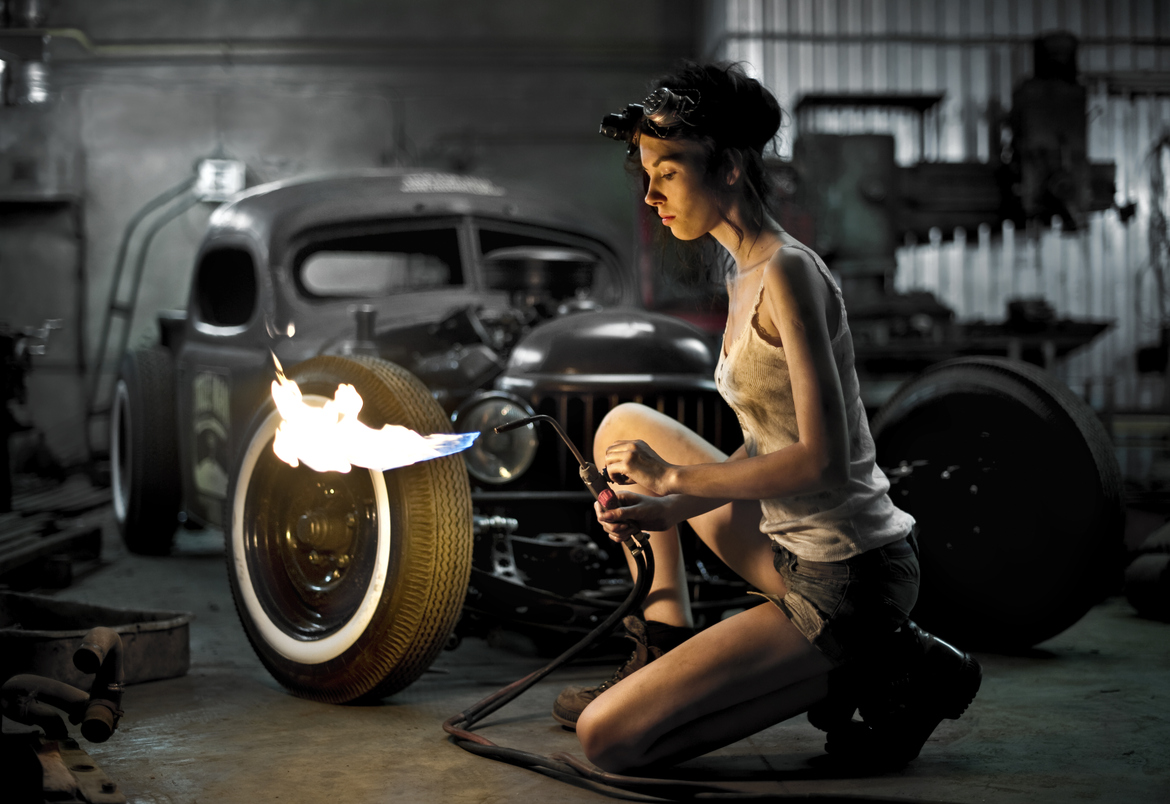
Welding with gas made by burning fuel gas mixed with oxygen (O2), giving rise to a high temperature flame (3000o) were Able to melt the parent metal and filler metal. Type of fuel used acetylene gas, propane or hydrogen, so the way this welding oxy-acetylene welding is called or known by the name of the carbide weld. Acetylene flame is obtained from burning a mixture of oxygen and acetylene gas used to heat the metal until it Reaches the melting point of the parent metal. Welding can be performed with or without filler metal. Oxygen is obtained from electrolysis of water or liquefaction process. Oxygen is commercially Generally come from the air liquefaction process in the which oxygen is separated from the nitrogen. Oxygen is stored in steel cylinders at a pressure of 14 MPa. Acetylene gas (C2H2) is produced from the reaction of calcium carbide with water. Rising gas bubbles and sediment That Occurs is calcium oxide. Reactions occur in acetylene cylinder That is:


CaC2 + 2H2O ® Ca (OH) 2 + C2H2

calcium carbide acetylene gas Cretaceous shallow water

When the count was approximately 1 kg CaC2 Produce 300 liters of acetylene. The nature of acetylene (C2H2) the which is a fuel gas is colorless, non-toxic, odorless, lighter than water, growing niche to separate Themselves when there is an increase of pressure and in temperature (above 1.5 bar and 350 ° C), soluble in a porous mass (acetone).

Calcium carbide is a hard, like stone, gray and formed as a result of Reaction Between Calcium and coal in electric kitchen. The reaction is then crushed, selected and stored in a sealed steel drums. Acetylene gas can be obtained from the acetylene generator acetylene gas produced by mixing carbide with water or can now be purchased in the gas tubes ready for use. To be safe acetylene gas pressure in the tube should not exceed 100 kPa, and kept mixed with acetone. Acetylene tube filled with a porous filler material is saturated with acetone, then filled with acetylene gas. Tubes of this type can accommodate acetylene gas pressurized to 1.7 MPa.

Principle of welding is not too complicated. Simply by adjusting the amount of acetylene gas and oxygen, then ends with a flame near the flame Brought Will Arise. But the amount of acetylene gas and oxygen should be arranged so as to turn the pressure bit by bit. Acetylene gas when it is turned on the flame of the flame used to remove soot. If the acetylene gas too little is played, then the weld will not light.

Speed ​​of recall of gas per hour from an acetylene cylinder must not be Greater than 20% (one fifth) of its contents, so That gas can be flowed acetone (acetylene cylinders must always be perpendicular).

Flame combustion in oxy-acetylene welding may change depending on the ratio Between oxygen gas and the gas asetilennya. There are three Kinds of fire in the oxy-acetylene welding as shown in the figure below:
More acetylene flame (flame carburizing)
That if too many comparisons used the acetylene gas in the inner cone and outer cone will Arise a new cone of blue flame. Among the light cone and the outer sheath of the cone will have whitish, Whose length is determined by the amount of excess acetylene. This will cause the liquid metal carburizing. Flash is Widely used in metal welding monel, nickel, Various types of steel and a variety of non-ferrous material surface hardening.

Neutral flame
This Occurs when the flame of oxygen and acetylene ratio of about one. Flame consists of a cone in a shining white and blue cone outer nodes. Required oxygen flame comes from the water. The maximum temperatures as high as 3300 to 3500 ° C is reached at the end of the flame cone.

More oxygen flame (flame oxidation)
When oxygen gas is more than is needed to Produce the neutral flame flame Becomes shorter and the color changed to purple cone. This flame will cause oxidation or decarburization process on the liquid metal. This oxidation is the flame That must be used in fusion welding of brass and bronze, but not recommended for other welding.

Because it is Able to change the composition of the molten metal excess acetylene flame and the flame of oxygen excess can not be used to weld steel. At the end of the temperature of the cone in approximately 3000 ° C and in the middle of the cone is approximately 2500 ° C.

Rabu, 07 Maret 2012

Resistance Welding Machines Control

Welding is used in many forms. Today, electronics, and other small-size devices are growing in the welding industry, a sector sensitive to the resistance welding process. This is the body, through the melting point of contact and fused weld tannagagi two times when the hot parts, which is a thermal process. This method is similar to other heat sealing, but with some differences. The first of these differences, of course, the size of the components and solder. Microelectrodes micro-resistance welding machines are kept, welder welding process itself, the box containing the control electronics and controls, and the welding head consists of the workpieces in small and put them in contact. Points or contact points rather than themselves as micro-electrodes, 0.010 square centimeter in size, very small. One of the most precise control of electric welders and weld heads, very precise control of the energy of the electrodes would not disrupt the weak.

There are three types of micro-resistance welding electrode welding, dig welding, projection welding straight through. A weld line, welded to each other as objects to be constructed in contrast to the two electrodes, such as electricity, Cut, a heating of the weld. Along the length of a welding electrodes or workpieces, except for the two overlapping sites to be moved to form a continuous series, in fact, a single weld line. A humpback welding projections extending in fact its name from the two surfaces. If this method is a thin piece of a larger piece of welding, thermal balance, the improvement will reduce the amount of energy to dig a welded reasons, a number of uses, so that a plurality of pulse welding with spot welding.


Parallel to the weld gap to the following two types of micro-resistance welding mentioned in the preface. Both the type of welding electrodes, making approached in the same direction. With an insulating layer on the opposite side of the pieces of this technique is especially useful when welded. Currently, there are two things in a series configuration of the electrode assembly and the other electrode, an electrode and allows the flow. Welding step, the contact electrode material and the flow passes through the interface that all objects.

The first step is to perform micro-resistance welding, the copper electrode on the other two parts over the place. Next, the welding head, welding, narrow, two pieces brought to a point near the bottom of the upper electrode. Transfer the pieces to the point of intersection of the two current electrodes are pressed together. There is a connection between the two electrodes to heat the material quickly, but both were to dissolve. Power when weld between the two parties to form, cooling the molten zone and solidifies.

Micro resistance welding systems for automotive, aerospace, medical and electronics manufacturing, including the majority of areas, including in many applications. Micro resistance welding of thin wires soldered to the rest of widespread PCB pads are used for the electronic industry. Some of the naming of this type of welding, sensors, lights, batteries, used in the manufacture of solar panels and smoke detectors. Automobile sector, micro-resistance welding of light, air bag systems, electronic sensors and controls used.

In short, the most popular form of micro-resistance welding connection hardware. It would be cheaper for a clean, safe and fast. The usefulness of micro-resistance welding to the development of the industry.

Kamis, 23 Februari 2012

Electric Arc Welding Technology

Electric Arc Welding
For centuries wrought las used as the primary process to connect the metal without much experience growth. In the early 19th century, found a new way, namely electric arc welding flame (Electric Arc Welding) with a carbon rod electrode without the wrapper by using the battery as a power source. The main weakness of electric welding process is the oxidation of carbon is high relative to the weld (weld easily rust) so that the welding is widely used.

At the same time, in 1877, found weld resistance (Resistance Welding). A British physicist, James Joule, recognized as the inventor. In 1856 he heat up two pieces of wire with electric current. During the heating process, the wires are pressed to each other. It turns out the two wires are tied to each other after heated.

In further development, resistance welding produces several types of welding processes, eg welding flash (Flash Welding) in the electrical resistance 1920. Welding achieve glory of being created different types of robots. Developed to meet the needs of the various forms of electrical resistance welding includes welding point, interval, seam (line) and projection. Welding Process implement this in the heat and press. Electrode serves as a channel for the flow and pressure plate-shaped workpiece.

In the next decade, introduced last hermit (Thermit Welding) by adding a chemical process is repertoire welding technology. Welding termit by pouring molten metal between two metal end which would be connected so it would melt. After freezing the fused metal and liquid metal is poured to function as an added ingredient.

In the late 19th century found oxy acetylene welding, weld it managed to shift the use of welding wrought and dominate the welding process for several decades to develop electric welding ..
In 1925, oxy acetylene welding repair is shifted by the electric arc welding in which welding arc is wrapped electrode wear. After the fire, wrapping electrode produces gas and slag. Gas protects the weld crater of oxidation during the welding process is underway. Protect the weld slag during the freezing process to cool (until the slag is cleaned). Limitations of arc welding electrode rod is limited so long electrode any given period should stop changing the welding electrode. More material efficiency is far from 100% because I had no butt.

Starting from this weakness was then in the late 1930s created an arc welding electrode coils. In principle, the welding is not necessary to stop before reaching the end of the weld line. And welding can be done by automatic or semi automatic. Used as a protective flux. Flux outlined shortly in advance so that the electrode electric arc flame hidden by the flux. Advantage, the operator is not dazzled by the flame of an electric arc, weakness, limited to the welding position just under the hands of the other positions scattered flux will fall before the function.

In 1941 in the United States found Tungsten electrode. Tungsten is not melted by the heat of the flame of an electric arc that does not feed in the weld. Core is used as a protective gas (Inert) which can persist for some time on his condition. Core gas ejected stricken welds so the welds protected from oxidation. Because it uses the core as a protective welding welding is often called TIG welding (Tungsten Inert Gas).

The successful use of gas tungsten core pad pad pad pad electrode also tried the roll in the early 1950s. This process is hereinafter referred to as Gas Metal Arc Welding (GMAW) or MIG welding (Metal Inert Gas). Because metered gas is very expensive then used a mixture of argon and oxygen gas or CO gas is quite active. Welding is commonly called the Metal Active Gas (MAG). Can also be used protective argon mixture with CO for not more than 20% the result is quite good because it does not leave the slag. Please note that the protective gas is more expensive gas, then the way is only used for special purposes.

Found the next arc welding electrode welds with a protective roll floured. In order to be used in all positions, such as perforated pipe electrodes are made to put the flux. The process is relatively cheaper than gas arc welding, it can be to any position and can be developed technical welding semi-automatic or fully automatic welding is called the flux cored arc welding electrodes (Flux Core Arc Welding) electrodes Then there are the components to be mounted on the other. This is called weld stud welding. Stud mounted on the main body through three stages, namely the setting position, the search ends and the main body studs and stud pressure on the main body shortly after the arc flame is turned off.

After that developed electric welding high frequency is 10 000 to 500 000 Hz. High-frequency electric welding is often called induction welding. Judging from the unification process of the workpiece, solid welding including welding aided by heat to break down a layer of oxidation or dirt on the surface of the workpiece. Produced heat the workpiece surface is very thin so it is suitable for welding thin plate.

In the 1950s, transforms electrical energy into a beam of electrons fired from the workpiece. Greater the heat generated and the dimensions of the former electron is much smaller than electric arc flame, welding very quickly so it is suitable for mass production. Hot region becomes more narrow so it is suitable for materials sensitive to thermal changes. Excellent weld quality and accuracy, it's just very expensive equipment. This method is called las electron (Electron Beam Welding).
Scratch Welding
In 1950, AL Chudikov, a mechanic from the Soviet Union, put forward its observations on the theory of mechanical power can be converted into heat energy. Friction that occurs in the engine parts that move caused many losses as partly generated mechanical power turns into heat. Chudikov argue, so the bias should be used in the welding process. After going through a trial and he succeeded in welding research by utilizing the heat caused by friction. To increase the heat that occurs, the workpiece is not rotated but only pressed one against another. Pressure also serves to accelerate fusion. This is called friction welding (Welding Friktion)

Plasma Welding
Electric arc plasma flame welding (Plasma Arc Welding). Plasma process is an improved welding tungsten actually, it's just an electric arc burning between the electrodes do not appear to work but the object appears between the tip electrode with the gas flowing around the core. Welding plasma was better than tungsten because of arc welding flame that appears more stable power with a smaller diameter so that the heat is more concentrated. Faster welding process bias, in addition to tungsten never touch the workpiece.

Sound Welding
Earlier in the year 1960 was marked by the discovery of welding that uses high frequency sound (Ultrasonic Welding). It also uses an electric welding process works, there is no power at the workpiece, the heat generated merely the result of processes and it is only helpful in the process of unification of the workpiece.

Voice used ranged from 10 000 to 175 000 Hz, the sound vibrations transmitted through electrode mounted on the workpiece. Then pressure is applied to the workpiece during the process. Advantages of this process is suitable for thin objects and not affected the type of material to which you connect. Not wearing thermal energy as the primary energy is its own advantages in certain materials and thin, it's just less work for the workpiece thickness above 2.5 mm x 2.

Various forms of ultrasonic welding:
Wedge reed spot.
Leteral drive spot.
Overthung copuler spot.
Line.
Ring.
Continuous seam.

Explosive Welding (Explosive Welding or EXW)
Explosive Welding (Explosive Welding or EXW) was developed from the observation of one's days of World War I, there are fragments of a powerful bomb attached to the other metals fell. Carl's research conclude that shrapnel is attached because the effects of jet in the event of collision. The effects of jet capable of cleaning dirt on the surface of the object so that it contacts between atoms both objects and generate a strong enough.
Laser Welding.
In 1955, the physicists found laser beam, simply speaking rays produced at a particular wavelength and parallel, then enlarged, light is then focused. The heat generated at the focus point is very high. By the year 1970, the laser began to apply the base pad, as the laser beam can be accurately adjusted so that the laser welding very suitable for special equipment.

Laser welding can be used to weld objects with a thickness of 0.13 mm to 29mm at the sliding speeds ranging from 21 mm / sec to 1.2 mm / s. Issues arising pedestal pad as well as laser welding electron, the workpiece is very small rift between 0.03 to 0.15. Up at this time a lot of classification methods used in the welding field, is due to the agreement in terms of these things. In the conventional ways of classifying these at this time can be divided into two groups, namely the classification based on the work and the classification based on energy use.